
New Braunfels, Texas · Cracks
Foundation Crack Repair in New Braunfels, TX
Cosmetic or a sign of movement? How to tell, and how each one gets fixed.
Foundation crack repair starts with one question: is the crack cosmetic, or is it a sign the house is moving? A cosmetic crack can be sealed and forgotten. A crack from movement needs the cause fixed first, or it will open right back up.
Tell us what you're seeing
- Free inspectionIt costs nothing
- No obligationStopping after the inspection is fine
- Town-by-town soil dataFrom the USDA soil survey
- Referral service, disclosedWe pass requests to local pros
- Call (830) 500-5898Or send the short form
Finding a crack can be unsettling, especially in a newer house. Most of New Braunfels is young, with a median build year of 2005, so the crack you've found may be the first your house has shown. The reassuring part comes from the guidelines Texas engineers use: they say most cracks don't harm a foundation's strength.
Cosmetic or Structural?
A crack's look tells you a lot. The guidelines Texas engineers use say the physical details of a crack should guide any judgment about it. HUD's guide to inspecting homes points to the same details. Here are the four kinds you're most likely to see:
1. Hairline cracks in drywall or plaster. HUD's inspection guide says wall and ceiling cracks usually come from settlement, framing that bends or warps, or small seasonal movements with heat and humidity. A thin crack that doesn't grow is usually cosmetic.
2. Stair-step cracks in brick or stone. These follow the mortar joints in a rough diagonal. HUD says cracking is most likely at corners and next to openings. A stair-step crack that's wider at one end is worth a closer look, because HUD links tapered cracks to faster settlement.
3. Diagonal cracks from the corners of doors and windows. HUD says cracking is most likely next to openings, so these are often the first to show. One small crack may mean little. Several in the same part of the house may point to movement.
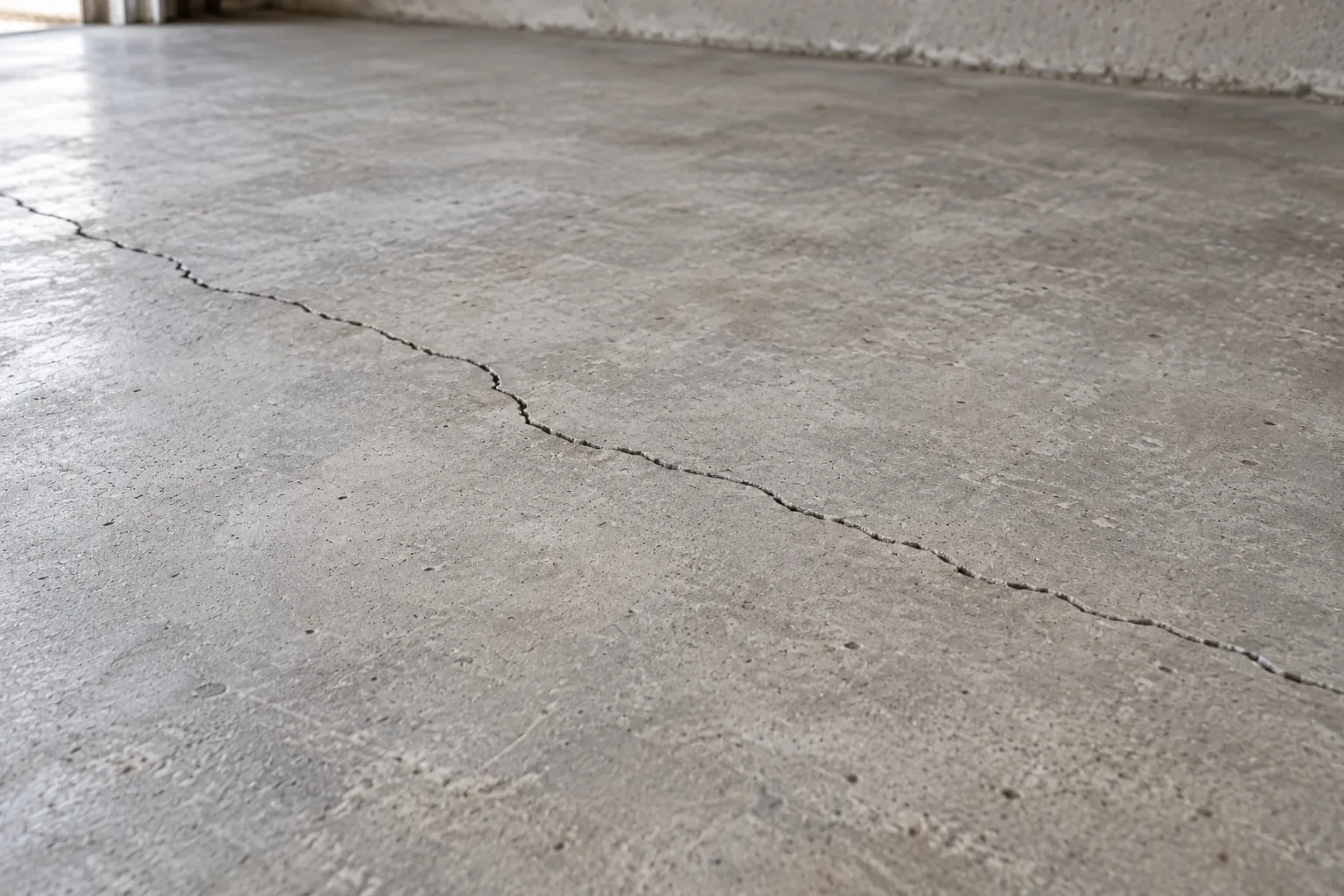
4. Cracks in the slab itself. You'll often see these in a garage floor or under flooring. The Texas guidelines list cracking of concrete foundation parts as a sign of foundation movement, but also say most cracks don't affect strength. Width, length and whether it's growing tell the story.
Some clues apply to every kind:
- Size. HUD's housing inspection standard flags a foundation crack that's 1/4-inch or wider and 12 inches or longer.
- Clean or dirty. HUD's guide says a clean crack points to recent movement, while a dirty or painted-over one may be old and inactive.
- Age of the house. The same guide says a 1/2-inch crack in a new building may mean rapid settlement. In a building 50 years old, it may mean movement of only 1/100 of an inch a year. In a city of young homes like New Braunfels, that makes a wide crack worth taking seriously.
- Change. A crack that grows, or keeps coming back after it's patched, is the clearest sign of movement.
Four common kinds of crack
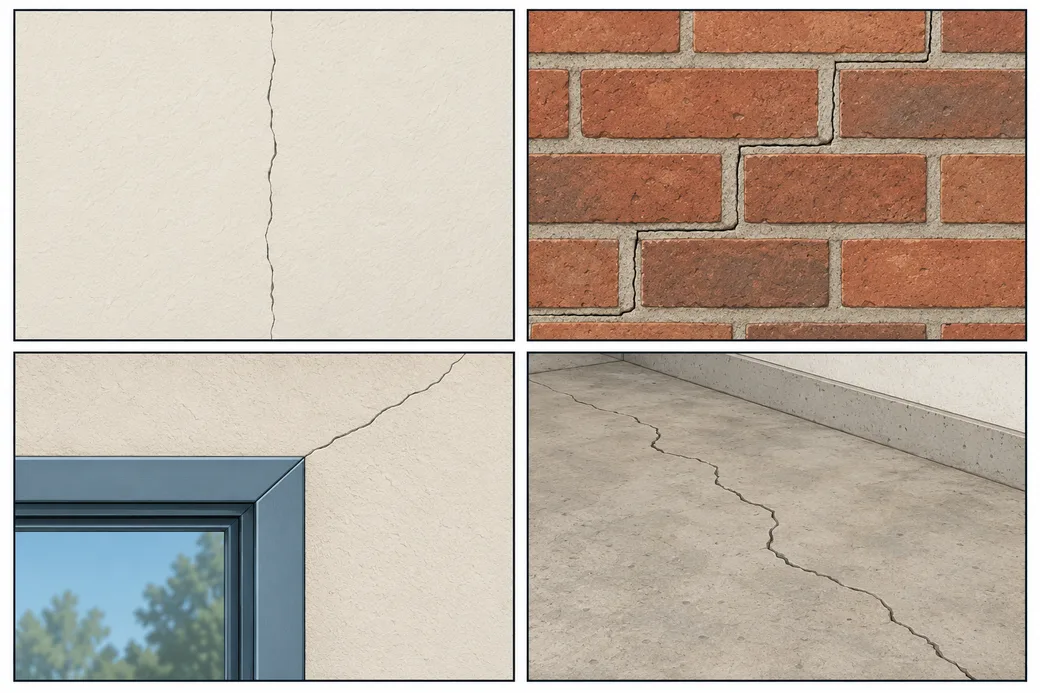
- Hairline crack in a painted wall
- Stair-step crack along brick or stone mortar joints
- Diagonal crack from the corner of a window
- Crack across a concrete floor
What Foundation Crack Repair Involves
1. Measuring and watching. Mark both ends of the crack with a pencil and the date, and note its width. HUD's guide mentions crack monitors you can buy that show movement over time. It also says seasonal movement may take six months or more to show.
2. A closer look if it's moving. If the crack is growing, an inspection with floor measurements will show whether part of the house has dropped. Our foundation inspection page explains what a good one covers.
3. Fixing the cause. If the house is moving, the crack is a symptom. The fix is slab foundation repair, pier and beam repair, or work on the water that's moving the soil.
4. Sealing the crack. Once the cause is handled, or if the crack was only cosmetic, it can be filled and finished. In New Braunfels, cosmetic work doesn't need a building permit, but foundation repair does.
One thing to plan for: the Foundation Performance Association says contractor warranties on foundation repair typically don't cover finishes like drywall, brick and paint. Cosmetic crack repair after a lift is usually a separate job.
Foundation Crack Repair on Clay and on Limestone
On the clay side, cracks breathe with the seasons. Branyon clay, the most common soil in New Braunfels, reads very high for shrink and swell from about a foot down to past 6 feet. August is the city's hottest month, with an average high of 94.6°F. As clay dries through late summer, it shrinks back from the edge of a slab, and HUD's guide says seasonal movement makes some cracks open and close.
A crack that opens every summer and narrows every spring is moving with the ground. Sealing it without dealing with the moisture often means sealing it again next year.
On the limestone side, the ground is far steadier. Comfort soil has bedrock about 13 inches down, and Rumple about 28 inches. If a crack keeps growing in a house on that kind of ground, look for water first: a plumbing leak under the slab, a downspout emptying at the wall, or a low spot that holds rain.
Our guide to New Braunfels soil shows how to look up which side your lot is on.
What Foundation Crack Repair Costs
For a cosmetic crack, published prices are modest. A national franchise's San Antonio office lists crack repair at $300 to $800. A New Braunfels-area company says repairing a small crack in a slab may cost around $500 to $1,000.
If the crack turns out to be a symptom, the real cost is the foundation repair behind it. Our foundation repair cost guide explains why those quotes vary so much.
Questions About Foundation Crack Repair
Should I seal the crack right away?
Not yet, if you can wait. Mark it and watch it for a while first. HUD's guide says a clean crack points to recent movement, and sealing it hides that clue. If the crack lets in water or pests, a temporary seal is fine. Just photograph and measure it first.
Is a crack in my garage floor a foundation problem?
Not necessarily. Slab cracks are common, and the Texas guidelines say most cracks don't harm a foundation's strength. It's worth a closer look if the crack is wide, growing, or uneven, with one side higher than the other.
My house is only a few years old. Should a crack worry me?
HUD's guide says wall and ceiling cracks usually come from settlement or small seasonal movements, so a few thin ones aren't unusual. But the same guide says a 1/2-inch crack in a new building may mean rapid settlement. If a crack in a newer house is wide or growing, it's worth having it checked. If you bought from a builder, check whether any warranty covers the foundation.
Do I need a permit to repair a crack in New Braunfels?
Not for cosmetic work. The city says redecorating and minor repairs don't need a building permit. If the fix involves the foundation itself, such as piers or a lift, it does need a permit, pulled by a registered contractor.
Related Services
- Foundation inspection to find out whether a crack is moving before anyone seals it.
- Slab foundation repair when cracks come from a slab that has settled.
- House leveling when cracks show up along with floors that slope.
Towns We Serve
We serve New Braunfels and nearby towns, including Seguin, San Marcos, Kyle, Canyon Lake, Garden Ridge, Schertz, Cibolo, Selma, Universal City, Live Oak and Converse. See all service areas.
Get a Free Crack Inspection in New Braunfels
Let us know where the crack is and how long you've noticed it, and we'll pass it to a foundation repair professional who works in your area. They'll take a look and talk you through what they find. It costs nothing, and there's no obligation.
Tell us what you're seeing